In the modern eCommerce business, operational synergies and customer service efficiency are essential. Businesses need systems in place that allow them to connect their sales channels to their back-end systems appropriately. There is great potential is targeting Shopify and Acumatica , as Acumatica is an ERP that is fully web-based and Shopify is an eCommerce platform. However, lack of proper integration tends to slow down business growth and expansion.


Today’s newsletter is based on the prospect of integration of Shopify and Acumatica ERP with a particular emphasis on the key trends, actual problems in the industry, as well as the possibilities rendered by a no-code platform such as eZintegrations™.


The Real Business Problem


Over time however, eCommerce as a whole began to develop in a fragmented way which leads to inefficiencies such as:


  • Manual Data Entry: There are times when businesses are forced to do updates via manual procedures for customer information, stock levels and order details which result in mistakes and ineffective use of resources.
  • Delayed Fulfillment: With no instant data merging, processing and order shipping delays can lead to unsatisfied clients.
  • Inventory Discrepancies: Being unable to meet sales demand or having over sales due to unsynchronized figures are factors that result in loss of revenue and a bad image of the brand. –
  • Scalability Bottlenecks: There comes a time when the number of orders increase along with data but the business tries to scale by employing already disjointed systems which effects operational efficiency.


For example, ARC Advisory pointed out that in some cases, such operational inefficiencies can reach as much as 25% for businesses that do not adopt integrated ERP with eCommerce systems.


Industry Trends: Why Integration Is the Need of the Hour


The change in the eCommerce landscape is active as it is directed by customers with needs and technology that is ever evolving. Some of the trends that can be noted include:


  1. Real Time Data: A major concern for the customer is to receive information on stock availability, pricing and shipment information promptly.
  2. Cross-selling: A single business now offers its services and products on more than one site, making the need to have all data in one system so as to easily synchronize information.
  3. Customized Interaction: The process of marketing and order management should be customized only when the right information is present on the database.


According to McKinsey & Company, eCommerce businesses that use real time data have a 15-20% higher customer retention rates.


Why Shopify-Acumatica Integration?


The integration of Acumatica and Shopify allows users to easily transfer information between the systems and enables them to create a streamlined infrastructure for all their eCommerce needs. Some of the advantages that come with this integration include:


  • Increased Efficiency: Currently, workflow segments like inventory updates, customer order processing, order returns, etc., can now only be completed through automation or machine intervention.
  • Better Customer Experience: A customer who is able to receive fast fulfillment of orders and good accurate inventory information is more likely to trust a particular company and remain faithful to it.
  • Continuity of Operations: Businesses will be able to accommodate increase in order sizes and the amount of data being received inclusive of operations interruptions.


A mid-sized retailer scaling its online operations saw a 30% reduction in order processing time after integrating Shopify and Acumatica, thanks to automated synchronization.


Technical Challenges in Shopify-Acumatica Integration


Although the advantages seem to be evident such as the ease in managing orders, the integration between Shopify and Acumatica has some technical challenges such as:


  • Large Data Volumes: Dealing with enormous amounts of transactions and updates of inventories.
  • Error Handling: Enabling automated systems to retry the failed transactions without help from the user.
  • Real-Time Synchronization: Dealing with peaks of activity efficiently without lags in data or downtime.
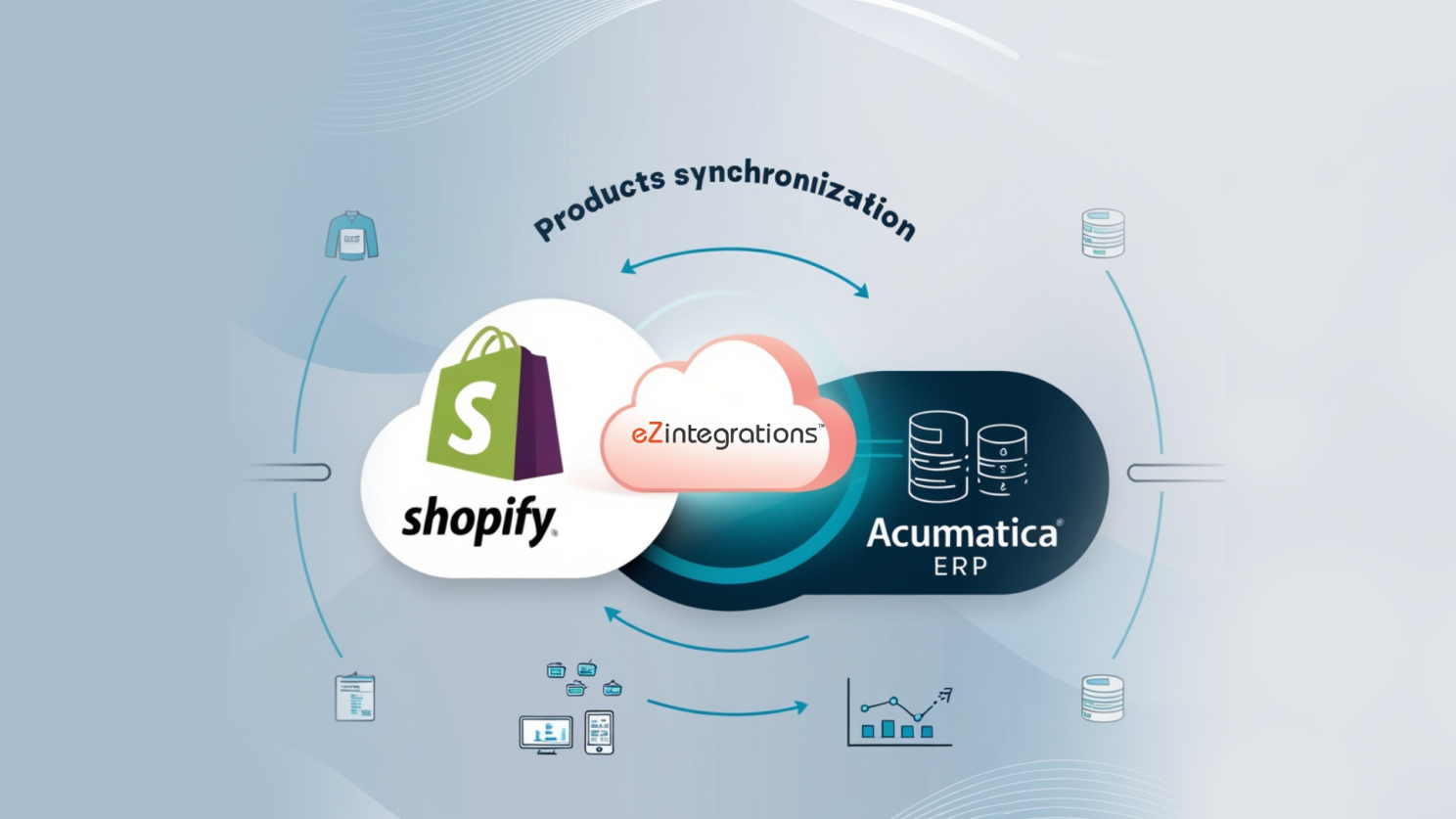
 

The eZintegrations™ Advantage


eZintegrations™ presents a platform that takes the form of a cloud application with no coding required to overcome these issues and harness the Shopify-Acumatica integration entirely.


  1. Real-Time Synchronization: Elimination of waiting for updates, whether for customers, inventories, or orders across different platforms.
  2. Error Management: Failed processes are automatically sent for resolution along with alerts for the appropriate action.
  3. Cloud Scalability: Being able to maintain operations during periods of peak sale and handle large volumes of data.
  4. Pre-Built Connectors: Reduces the amount of coding that has to be performed and facilitates quicker implementation.
  5. Secure Integration: All policy aspects ensure that the data is consistent and should conform to the highest security standard.


Real-World Impact


Case Study: Almost Fortune – How One Retailer Optimized Onboarding


An expanding apparel brand had issues with ensuring that data from Shopify was manually synced with Acumatica. The implementation of eZintegrations led to:


  • 50% Decrease of Manual Work: Automating tasks allowed for better allocation of resources towards strategic activities.
  • 30% Improved Customer Satisfaction levels: The ability to track orders and precise inventory levels instilled confidence in customers.
  • Effortless Scalability: The retailer was able to handle five times the regular order number without any interruptions thanks to a festive promotion.


Learning Takeaways for IT Managers and Executives


CIOs, CTOs, IT Directors, focusing on the joined Shopify-Acumatica ecosystem will benefit from:


  • Data Deciding: Constant access to data helps in making quick decisions regarding market strategies.
  • Efficiency of Resources: Since automated workflows streamline processes, the reliance on human resources is less for low-value sequential tasks.
  • Preparation for the Future: The scalable design will help to meet growth and customer requirements that will change in the future.

Adopting eZintegrations to connect Shopify and Acumatica ERP is not merely a technical enhancement – it’s a necessity for the business. In the world of eCommerce, businesses need to provide solutions which are adaptable, precise, and can easily expand.


An integrated system not only addresses operational inefficiencies and enhances customer scope but also prepares the business for inevitable changes in the future and longevity in a highly competitive environment.


Interact With Us

We encourage you to discover the next level of possibilities with Shopify-Acumatica integration newer interface. Visit our website for more details or contact our experts for a comprehensive consultation.


Let’s develop an eCommerce ecosystem built for the future.
Data integration, or the process of bringing data from different systems together, is critical for businesses of all sizes. Whether you’re a small business wanting to take advantage of online tools to improve efficiency, or a large enterprise looking to scale your data management capabilities, data integration is essential. In this comprehensive guide, we’ll explore the different types of data integration, discuss the benefits of implementing it, and outline the most popular data integration tool. So, whether you’re just starting on your data integration journey or are already well on your way, this guide will give you all the information you need to make the best decision for your business.

What is data integration?


Data integration is the process of bringing together different data sources into a unified platform. This allows businesses to better analyze and manage their data more cohesively. The benefits of data integration are manifold — from speeding up decision-making processes to better managing and analyzing data. To achieve the best results, data integration requires careful planning and execution. It’s also important to note that data integration is not a one-time process, but rather a continuous process that requires regular maintenance and updates. However, the rewards for undertaking data integration are immense, and businesses that invest in it stand to reap big rewards in terms of efficiency, accuracy, and customer retention.

The types of data integration


Data integration is an essential process for businesses of all sizes, and you must understand the different types of data integration. Infrastructure data integration is best suited for larger companies with complex processes and the need to integrate multiple systems. Application data integration is the most comprehensive solution and bridges the gap between different systems within an organization, making it the best solution for businesses with a large number of systems. However, process data integration is the easiest to implement and can be used for small to medium-sized businesses. Each type of data integration has its benefits and drawbacks that businesses should consider before making a decision. So, what’s the right data integration solution for your business? Let our comprehensive guide help you make the right choice.

Why Implement Data Integration?


Data integration is the process of integrating data from different sources to create a single source of truth. This is crucial for businesses, as it can help streamline business processes and performance gains will be evident quickly. By choosing the right data integration platform, you’ll be able to extract valuable insights more quickly and easily. It can also help reduce the time needed to extract data, which can save business time and money in the long run. data integration can improve business efficiency and decision-making by unifying data from multiple sources, making it easier to make informed decisions. If you’re looking to integrate data from multiple sources or to improve business efficiency and decision-making, data integration is the solution for you!

What makes a data stack?


When it comes to data, businesses need more than just access to raw data. They also need tools that make it easy for them to use and extract the necessary information from various sources, as well as tools that can help them process and manage large volumes of data. There are a variety of types of data integration that would require different software solutions — analytical, operational, or big data integration. A stack would then be made up of these individual software tools so business owners can focus on their specific needs rather than trying to cobble everything together themselves. This way, they can save time and get better results faster.

What are the Different Methods of Integrating Data?


Integrating data is important for businesses of all sizes, as it allows them to make better decisions and improve their business operations. There are some different methods available, each with its advantages and disadvantages. It is important to decide on the right one for your business based on its specific needs. For example, an API may be more suitable if you want to monetize the integration process or utilize data in innovative ways. One of the most important aspects of integrating data successfully is monitoring and maintaining it consistently so that results are always achieved. Without this strategy, you will end up wasting time and resources as well as damaging your credibility with potential clients or customers.

How to build a modern data stack


Data integration is essential for any business, but it can be a daunting task. That’s why it’s important to choose the right platform and data stack that will help you manage data easier and faster. A data stack is the foundation of your business, and it should be modern and scalable. To make the process easier, use automation tools to streamline data management and make data integration faster and easier. Additionally, use dashboards or reporting tools to stay organized and track data changes in real-time. By doing all of this, you will be on your way to building a strong data integration foundation for your business.

Data Silos


Data integration can be a complex process, but it’s essential for businesses of all sizes. By implementing systems that allow for data sharing, you’ll improve efficiency and communication within your business. This, in turn, will help you make better decisions and solve problems more quickly. However, data integration can also lead to problems because it makes it difficult to access, use, and analyze data. That’s where a data integration consultant comes in — they’ll help you get started and navigate the process with ease. They’ll also work to resolve any issues that may arise along the way. So, if data integration is something that interests you, be sure to reach out to a consultant to get started!

Benefits of Data Integration

Integrating data is one of the most important steps businesses can take to improve their operations. By sharing data between different parts of the business, employees can work more effectively and productively. In addition, data integration can lead to reduced costs, improved customer service, and even increased efficiency. So, what are the benefits of data integration? Here are four of the most important:

Data Integration Use Cases


Data integration can be a complex process, but with the right tools and the right guidance, it can be a smooth ride. Before you get started, it’s important to have a better understanding of your business and its needs. Once you know that, it’s time to start searching for the right data integrator. Make sure to take into account your business model, the data you need, and the integration use cases that are most applicable to your business. There are many options out there, so it’s important to decide what you need and what will work best for your business. Once you have a better understanding of data integration, it’s time to get started!

Data Integration Or iPaaS


With the data integration market growing rapidly, businesses are starting to realize the benefits of iPaaS which can provide businesses with a range of automation tools that make data transfer and synchronization easier and faster. They also offer a variety of integration options, including different platforms such as Salesforce, Microsoft Dynamics, Oracle, and SAP. By choosing the right integration solution, businesses can optimize their operations and save time and money. So, if you’re looking to simplify your data integration process, look no further than an iPaaS platform!

Popular data integration tool


Data integration is essential for businesses of all sizes. It allows for a wide variety of applications to be built, which can increase efficiency and productivity. There are many different data integration tools available, so it’s important to select the one that best suits your business needs.

Some of the most popular data integration tools include eZintegrations™ AI cloud-based no code iPaaS to integrate data between any source.

Make sure to research each tool before choosing it, as not all options are suitable for every business. When choosing a data integration platform, be sure to consider the specific needs of your business. Is analytics a major priority? Do you need to process large amounts of data quickly? Do you need to store data in a variety of formats? Once you have determined the needs of your business, it’s time to start building those applications!

Frequently Asked Questions


What are some of the most important considerations when integrating data?


There are a few important considerations you should make when integrating data. First, make sure that your data is secure. This means that you protect it from unauthorized access and make sure that it’s not being tampered with in any way. Once your data is secure, it’s time to start analyzing it. Consider the different types of data you’ll be integrating, and choose the right platform or tools to do so. Then, use dashboards and reports to get a comprehensive understanding of the data and make informed decisions.

How often should I revisit my data integration plan to ensure success?


It is important to revisit your data integration plan monthly to ensure success. By doing this, you can test and verify the effectiveness of your current process, identify any challenges or bottlenecks concerning exchanging information, and keep track of any changes or updates that may have occurred in your business environment.

How can I integrate my business data with a third-party platform?


If you’re looking to integrate business data with a third-party platform, then an iPaaS is the way to go. iPaaS allows you to easily connect your business data with a third party’s software to get insights and make smarter decisions. For example, say you own a business that makes and sells jewelry. You could use an iPaaS to connect your business’ data with a platform that offers analytics for jewelry sales so that you can track customer data, trends, and performance analytics. This way, you can make better decisions about what products to sell, how to market them, and more. iPaaS integration is also common for sending push notifications, real-time SMS or email alerts, managing customer relationships etc.

What are the best practices for migrating and managing my business data?


Before you begin any data migration or management process, you first have to have a clear idea of the goals you are trying to achieve. After that, it’s important to choose the right tools and technologies needed for the job. The most important part of your data integration project is ensuring that all business processes and systems are up and running before starting. This way, there are no surprises and everything runs smoothly during the migration process.

What tools am I likely to need to undertake this process successfully?


The best tool in market to integrate data is eZintegrations™ that is a data integration platform and cloud-based iPaaS (Integration Platform as a Service) that can connect any data system with any other data system using the power of AI. The data integration possibilities are limitless using our user-friendly platform. It is completely browser-based and requires no programming or coding to operate.

By leveraging eZintegrations™ no-code data integration platform as a service (iPaaS), users can connect data from fragmented sources and empower organizations to consolidate multiple cloud solutions into a single platform. It can integrate any system traditional RDBMS, NoSQL, Cloud Databases, Data Warehouse, Data Lake, REST API, SOAP API or logs, videos, voice notes or stats from Linux commands as well as various protocols from IoT sensors.

Conclusion


Data integration is a process that allows different systems to communicate with each other. By doing this, businesses can gain a better understanding of their data, which can then be used to make informed business decisions. In this blog, we have covered the different aspects of data integration and its benefits. If you are looking to implement data integration into your business, be sure to read through the entire blog for a comprehensive understanding of the topic. We hope you have found this guide helpful!


Introduction


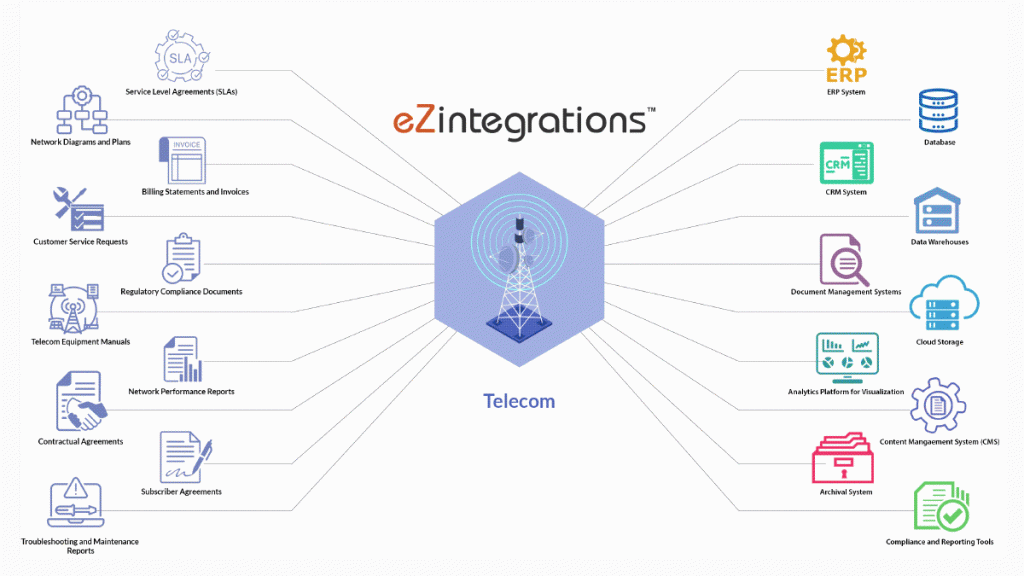
In the fast-paced world of telecommunications, managing vast amounts of data is a constant challenge. From service agreements to network performance reports, telecom companies deal with a variety of documents that require careful processing and analysis. This can be a time-consuming and error-prone task, leading to delays, inaccuracies, and inefficiencies. However, eZintegrations™ AI Document Understandingis here to revolutionize the telecom industry by providing intelligent solutions to streamline document handling and improve operational efficiency.


Challenges in the Telecom Industry


1. Content variations:Telecom documents come in different formats, styles, and layouts, making it difficult to extract relevant information accurately. From service-level agreements to network diagrams, each document requires a different approach.


2. Formatting issues: Inconsistent formatting within documents can lead to extraction errors and data misinterpretation. Dealing with multiple fonts, tables, and headings can be a daunting task for manual processing.


3. Multiple pages: Telecom documents often extend across multiple pages, resulting in tedious manual extraction processes. Extracting data accurately from numerous pages is time-consuming and prone to errors.


4. Real-time data extraction: Telecom companies need real-time access to data for decision-making and problem-solving. However, manual extraction slows down the process, making it difficult to act swiftly in critical situations.


5. Handwritten content:Handwritten content, such as customer service requests and troubleshooting reports, poses a unique challenge. It requires advanced optical character recognition (OCR) capabilities to accurately extract data.


6. Document quality: Poor document quality, with faded text, smudged ink, or low-resolution scans, can hinder accurate data extraction. Manual processing becomes even more challenging in these cases.


7. Sensitive data handling: Telecom documents often contain sensitive information like customer details, billing statements, and regulatory compliance documents. Ensuring data privacy and security while processing these documents is crucial.


8. Scalability: As the telecom industry grows, the volume of documents also increases exponentially. Handling this scalability challenge requires efficient and automated document-understanding processes.


eZintegrations™ AI Document Understanding as the Solution


eZintegrations™ AI Document Understanding is a game-changing solution for the telecom industry, addressing the challenges mentioned above. Leveraging advanced technologies like natural language processing (NLP) and machine learning, it offers several benefits:


1. Service Level Agreements (SLAs): eZintegrations™ AI Document Understanding enables the extraction of key information from SLAs quickly and accurately. By automating this process, companies can ensure compliance and strengthen their customer relationships.


2. Network Diagrams and Plans: Extracting data from network diagrams and plans becomes effortless with eZintegrations™ AI Document Understanding. This allows for better network management and optimization, ensuring smooth operations.


3. Billing Statements and Invoices: Automated extraction of billing information improves financial accountability, reduces manual labor, and enhances accuracy. eZintegrations™ AI Document Understanding seamlessly integrates this data into enterprise resource planning (ERP) systems.


4. Customer Service Requests: eZintegrations™ AI Document Understanding allows for efficient processing and analysis of customer service requests. By automating data extraction, telecom companies can provide faster and more accurate responses, leading to improved customer satisfaction.


5. Regulatory Compliance Documents: Ensuring compliance with regulatory requirements is essential in the telecom industry. With eZintegrations™ AI Document Understanding, organizations can extract and structure data from compliance documents effectively, reducing the risk of non-compliance.


6. Telecom Equipment Manuals: Extracting information from equipment manuals becomes effortless with eZintegrations™ AI Document Understanding. This empowers technicians to troubleshoot and maintain equipment more efficiently, minimizing downtime.


7. Network Performance Reports: Real-time data extraction from network performance reports enables telecom companies to identify and address network issues promptly.


8. Contractual Agreements and Subscriber Agreements: Extracting key terms and clauses from contractual agreements and subscriber agreements is crucial for telecom companies. eZintegrations™ AI Document Understanding streamlines this process, ensuring accurate and efficient contract management.


9. Troubleshooting and Maintenance Reports: Automation of data extraction from troubleshooting and maintenance reports aids in identifying patterns and trends, allowing for proactive maintenance and faster issue resolution. eZintegrations™ AI Document Understanding enhances the overall efficiency of telecom maintenance operations.


10. Telecom Licensing Applications:Processing telecom licensing applications involves extracting important information from various documents. eZintegrations™ AI Document Understanding simplifies this process, ensuring timely and accurate application processing, in compliance with regulatory requirements.


11. Network Security Policies: Document understanding technology allows for efficient extraction of data from network security policies. This ensures adherence to security protocols and enhances the overall cybersecurity posture of telecom companies.


12. Telecom Infrastructure Leases: Managing telecom infrastructure leases requires extracting critical details from lease agreements. eZintegrations™ AI Document Understanding automates this process, reducing manual effort, and improving lease management efficiency.


13. Telecom Project Plans and Emergency Response Plans: eZintegrations™ AI Document Understanding enables the extraction of essential information from project plans and emergency response plans. This facilitates effective management of telecom projects and enhances emergency preparedness.


14. Telecom Network Logs: Analyzing network logs is crucial for identifying potential issues and optimizing network performance. With eZintegrations™ AI Document Understanding, telecom companies can swiftly extract and analyze data from network logs, enabling proactive network management.


15. Marketing and Promotional Materials: Extracting insights from marketing and promotional materials is essential for effective marketing strategies. eZintegrations™ AI Document Understanding helps telecom companies extract data from these materials, enabling data-driven decision-making and improved marketing campaigns.


16. Telecom Equipment Specifications: Automating the extraction of equipment specifications from various documents enhances the procurement and management of telecom equipment. eZintegrations™ AI Document Understanding simplifies the process, facilitating accurate equipment selection and procurement.


17. Data Analytics: By enabling the collection and extraction of data from different sources, eZintegrations™ AI Document Understanding prepares the data for in-depth analysis. Telecom companies can leverage this valuable data to gain insights, make informed decisions, and drive operational efficiency.


For a more in-depth exploration of eZintegrations AI Doc Understanding and how it can transform document handling in the telecom industry, please visit our page. Discover the full range of features and capabilities that can streamline your document processing workflows.


Discover the Difference—Try Free for a Year!


Conclusion


The telecom industry faces numerous challenges when it comes to document understanding and data extraction. eZintegrations™ AI Document Understanding provides intelligent solutions to overcome these challenges, offering accurate and efficient extraction of information from various telecom documents. From service level agreements to billing statements, this technology revolutionizes the way telecom companies handle and process data. By implementing eZintegrations™ AI Document Understanding, telecom companies can enhance operational efficiency, improve customer service, ensure regulatory compliance, and make data-driven decisions to stay ahead in this fast-paced industry. Embracing this transformative technology is key to unlocking efficiency and innovation in the telecom sector.


Imagine losing valuable time and resources due to duplicate vendor records, or facing compliance risks from outdated supplier information. With nearly half of U.S. companies grappling with data accuracy issues and 78% of Chief Procurement Officers focused on improving vendor data quality, it’s clear that effective vendor management is no longer a luxury—it’s a necessity. As supply chains grow more intricate and regulations become increasingly stringent, having accurate, reliable vendor data is crucial for staying competitive and resilient.


In response, businesses are turning to ERP-integrated vendor management systems to streamline processes, strengthen partnerships, and reduce risk. Effective data management doesn’t just boost efficiency—it builds compliance and trust, setting companies up for long-term success. In this newsletter, we’ll explore the transformative power of a robust, ERP-integrated vendor portal. We’ll look at real-world challenges and solutions and introduce how eZintegrations™ offers a comprehensive, simplified approach to mastering vendor management.


The Current Vendor Management Landscape in the US


Vendor management is a crucial part of any business, especially for companies with global reach and a diverse vendor base. According to recent data from the Procurement Leaders’ CPO Insights, over 78% of U.S.-based Chief Procurement Officers (CPOs) see improving vendor data quality as a strategic priority. This focus is driven by the need to avoid duplicate records, outdated information, and inconsistencies that can lead to costly mistakes and compliance issues.


In a market heavily influenced by stringent regulations—such as Sarbanes-Oxley, HIPAA, and FCPA—U.S. businesses must ensure that their data management systems meet high standards for accuracy, timeliness, and integrity. Vendor onboarding, validation, and tracking processes are integral in maintaining compliance and minimizing risk. However, 42% of companies report issues related to incomplete or duplicate vendor records, as highlighted in the American Productivity & Quality Center’s 2023 Procurement Benchmarking Report. This indicates that even with digital transformation initiatives, vendor data quality remains a significant challenge.


Case Study: Transforming Vendor Management with eZintegrations™


A globally recognized skincare and wellness company, known for its commitment to scientific innovation and holistic health solutions, faced significant challenges in managing vendor data. With a diverse supply chain and a high volume of vendors, the enterprise needed a streamlined solution to prevent data errors, reduce manual processing, and improve compliance.


Challenges Encountered


The company’s existing vendor management system was plagued by issues common to many U.S.-based organizations:

  • Duplicate Vendor Records: Duplicates caused by inconsistent data entry clogged the ERP system, making it difficult to manage accurate vendor profiles.
  • Compliance Bottlenecks: Manual updates for documents like W-9 and W-8BEN forms slowed down vendor onboarding and exposed the business to regulatory risks.
  • Data Inaccuracies: Incomplete and inaccurate vendor data affected decision-making and compliance reporting.
  • Siloed Teams and Systems: With independent departments and systems, the company struggled with visibility and control over its vendor management workflows.


Solution: eZintegrations™ as a Game-Changer


The skincare and wellness company selected eZintegrations™ as the integration solution to address these complex challenges and drive efficiency across its vendor management processes. Here’s how eZintegrations™ played a crucial role:


1. Streamlined Vendor Onboarding and Data Integrity

eZintegrations™ enabled the creation of a robust vendor portal that linked seamlessly with the company’s ERP system, automatically validating and eliminating duplicate vendor records. This streamlined process ensured that only unique and verified vendors entered the ERP system, improving data integrity from the start.


2. Automated Compliance Document Management

The solution automated the updating of essential compliance documents, including W-9 and W-8BEN files, significantly reducing manual intervention. With eZintegrations™, the company maintained up-to-date vendor information effortlessly, avoiding the compliance pitfalls associated with outdated or incomplete data.


3. Enhanced Data Quality with Advanced Verification Tools

eZintegrations™ incorporated comprehensive data quality management functionalities, which ensured that vendor data remained complete, accurate, consistent, and unique. This included checks for data integrity across the system, helping to eliminate discrepancies that could lead to costly errors.


4. Centralized Tracking and Improved Workflow Visibility

eZintegrations™ facilitated a centralized vendor tracking system, giving the company real-time visibility over its vendor management workflows. By tracking each vendor’s status and history, the business could respond to changes quickly and ensure that its data was both accessible and actionable across departments.


Key Benefits Achieved with eZintegrations™


After implementing eZintegrations™, the company experienced several transformative benefits:


  • Enhanced Data Completeness and Accuracy: Vendor records were automatically validated for completeness, accuracy, and uniqueness, ensuring that high-quality data flowed through the ERP system.


  • Improved Vendor Relationship Management: With accurate and consistent information, the company could foster stronger relationships with vendors, as onboarding and compliance processes became faster and more reliable.


  • Reduced Manual Errors and Compliance Risks: Automated document management and validation reduced the likelihood of manual errors, mitigating compliance risks and freeing up resources for higher-level tasks.


  • Visibility Across All ERP Modules: The integration enabled cross-departmental transparency, allowing teams to access vendor information whenever needed, facilitating better collaboration and decision-making.


This case study demonstrates how eZintegrations™ enabled a skincare and wellness leader to overcome vendor data challenges and optimize their vendor management processes. Through seamless ERP integration, the company achieved a robust, efficient, and compliant vendor management system that now serves as a foundation for future growth.


Integrating a Vendor Portal with ERP for Smooth Data Management


Implementing an ERP-integrated vendor portal was essential for overcoming these issues. The solution focused on three core areas:


1. Data Completeness and Accuracy: The integration ensured that vendor data completeness, accuracy, and integrity were maintained, reducing the risk of duplicate entries and unverified data entries.

2. Automated Updates for Compliance: By automating the updating of W-9/W-8BEN and other critical documents, the portal reduced manual interventions and errors, thus maintaining regulatory compliance effortlessly.

3. Enhanced Visibility and Tracking: Improved tracking and monitoring of vendor activities streamlined workflow, ensuring each vendor record could be validated and tracked effectively.


The results were transformative: enhanced vendor data quality, improved operational efficiency, and better cross-departmental collaboration. Moreover, maintaining accurate records allowed for more precise cost tracking and a reduction in compliance risks, demonstrating the clear value of ERP-vendor portal integration.


The Role of eZintegrations™ in Transforming Vendor Data Management


At the core of the success story lies eZintegrations™’ capability to smoothly integrate disparate data sourcesinto a unified vendor management ecosystem. Here’s how eZintegrations™ addresses the critical pain points:


1. Robust Data Quality Management: eZintegrations™ incorporates advanced data quality checks that ensure completeness, accuracy, consistency, and integrity of vendor data. By mitigating common errors and maintaining high data standards, eZintegrations™ helps businesses avoid costly mistakes and build better vendor relationships.


2. Reduced Manual Intervention and Automation: Through its automation capabilities, eZintegrations™ simplifies repetitive tasks like document updates (e.g., W-9/W-8BEN), which saves valuable time and reduces the risk of human error. This automation further aligns with U.S. labor market trends, where skilled labor is directed toward strategic tasks rather than administrative duties.


3. End-to-End Integration with ERP Systems: With real-time synchronization and end-to-end integration, eZintegrations™ eliminates the risks associated with data silos. Businesses can monitor, validate, and track each vendor in one place, enabling a holistic view of vendor performance and compliance.


4. Compliance and Security Features: For U.S. businesses, adhering to data protection standards is non-negotiable. eZintegrations™ is built with compliance in mind, ensuring that data is managed securely and adheres to all regulatory requirements.


The Business Impact of Improved Vendor Data Quality


A streamlined vendor management solution can offer a wide array of benefits that directly impact a company’s bottom line. According to a 2023 report by the Hackett Group, companies with robust vendor management systems see up to a 35% reduction in procurement cycle times. This efficiency gain not only drives cost savings but also enables more strategic supplier relationships.


1. Cost Reduction and Efficiency Gains: Reducing duplicate records and ensuring data accuracy can lead to substantial cost savings. A study by Deloitte indicates that data inaccuracies can inflate operational costs by 20% due to miscommunications and rework.


2. Improved Compliance and Risk Management: With real-time data validation, organizations can promptly address compliance gaps, avoiding costly penalties. The eZintegrations™ solution offers features like automated document management and status tracking, which are vital for regulatory compliance in industries like healthcare, finance, and manufacturing.


3. Enhanced Vendor Relationships: Consistent, high-quality data management translates to faster onboarding and seamless communications. In a competitive U.S. market, where vendor loyalty can be difficult to secure, a reliable vendor management system can foster trust and strengthen long-term partnerships.


If your organization is looking to streamline vendor management, eliminate data errors, and enhance vendor relationships, consider exploring eZintegrations™. Designed to simplify vendor data management, eZintegrations™ provides a comprehensive solution that ensures data quality, compliance, and operational efficiency.

To learn more, watch a demo video or download our detailed case studythat reveals how a prominent skincare and wellness company transformed their vendor management with eZintegrations™.


Discover how you, too, can revolutionize your approach to vendor data in today’s competitive landscape.


The U.S. insurance industry is in a period of rapid evolution, driven by rising consumer expectations, regulatory demands, and new technology capabilities. Insurers today face a range of challenges, from data fragmentation to inefficiencies in claims processing and customer service, that have traditionally hindered the ability to deliver timely, accurate services. However, innovative solutions in data integration, artificial intelligence (AI), and analytics are reshaping how insurers operate, allowing them to streamline workflows and deliver improved services.


This newsletter explores the major challenges in the U.S. insurance landscape and demonstrates how advanced solutions like those offered by Bizdata can help insurers remain competitive in an evolving marketplace.


Key Challenges Facing the Insurance Sector


Data Fragmentation

Data fragmentation is one of the most pressing issues plaguing the insurance industry. Insurers rely on vast amounts of data from various departments and sources, including customer relationship management (CRM) systems, claims data, and underwriting information. However, when data remains siloed across these different systems, it creates a fragmented view that can lead to inefficiencies, redundancies, and the inability to respond swiftly to customer needs.


Inconsistent Data Quality

Poor data quality not only impacts the underwriting and claims process but also limits the insurer’s ability to make informed decisions. Inconsistent data often results in errors during data entry, redundancies, and inaccuracies in reporting and customer handling. Consequently, low-quality data can lead to increased risk, customer dissatisfaction, and compliance issues.


High Operational Costs

Manual processes in claims handling, underwriting, and customer service add considerable time and cost to insurance operations. These labor-intensive workflows impact insurers’ bottom lines and create delays that erode customer satisfaction. On average, 20-25% of each claim’s cost is attributable to manual processing, data entry, and errors, which illustrates the need for streamlined, automated solutions.


Bizdata’s Solutions for the Insurance Industry


To address these challenges, Bizdata offers a suite of advanced technology solutions that integrate data, automate processes, and provide real-time insights for improved decision-making and customer satisfaction. Here’s how each of their solutions plays a role in transforming the insurance sector:


eZintegrations™: The Power of Smart Data Integration


eZintegrations™ is a comprehensive platform designed to unify data from multiple sources across the organization into a single, centralized view. By eliminating data silos, this solution helps insurers manage data flow across underwriting, CRM, and claims processes in real time. With eZintegrations™, insurers can access a complete, accurate view of their data, allowing them to make better, faster decisions. This integration ultimately leads to improved operational efficiency and enhanced customer experiences, as insurers can offer services that are both timely and precise.


For instance, with eZintegrations™, insurers can streamline claims processing by seamlessly sharing data between underwriting and claims teams. This eliminates the need for repetitive data entry and reduces the likelihood of human error, creating a more efficient workflow. A McKinsey study suggests insurers could reduce operational costs by up to 30% by leveraging data integration and AI.


Goldfinch AI Agent: Intelligent Claims Processing with AI


The Goldfinch AI Agent provides AI-powered automation for insurance claims processing, risk assessment, and compliance management. This solution leverages predictive analytics and automation to reduce the time and resources required for routine tasks, such as data entry and risk analysis, allowing insurers to focus on higher-value activities. By implementing Goldfinch AI Agent, insurers can enhance accuracy in claims handling, optimize risk assessments, and ensure compliance with regulatory requirements.


This tool’s predictive analytics capabilities enable insurers to better forecast potential risks and adjust their strategies accordingly. Moreover, by automating the claims process, insurers can significantly reduce processing times and improve customer satisfaction. Research shows that insurers using predictive analytics see up to a 40% improvement in underwriting accuracy, leading to better decision-making and higher retention rates.


Goldfinch Analytics: Real-Time Insights and Data Visualization


Goldfinch Analytics offers insurers powerful data visualization and reporting tools, helping them monitor operations in real-time and make data-driven decisions. With a user-friendly dashboard, insurers gain insights into key performance metrics, customer behavior trends, and process inefficiencies. This allows them to swiftly identify areas for improvement, optimize resource allocation, and enhance service quality.


With the ability to monitor data in real-time, insurers can make proactive adjustments to their claims processing, customer service, and underwriting operations. For instance, Goldfinch Analytics could reveal insights into claims patterns, allowing insurers to adjust their policies based on emerging trends and customer needs. A recent survey found that 70% of insurance customers prioritize real-time response capabilities, highlighting the value of integrated data in improving customer satisfaction.


Real-World Impact and Use Cases


These solutions are not only theoretically beneficial; they yield tangible results. Here are a few ways in which Bizdata’s offerings deliver real-world value to insurers:


  • Streamlined Claims Processing: With eZintegrations™ and Goldfinch AI Agent, insurers can reduce claims processing times by automating data flow and eliminating redundant tasks. Faster claims processing not only reduces operational costs but also enhances customer satisfaction.


  • Improved Decision-Making: By accessing a unified, real-time view of data through eZintegrations™ and Goldfinch Analytics, insurers can make well-informed decisions that enhance customer satisfaction and reduce risk exposure.


  • Enhanced Regulatory Compliance: The Goldfinch AI Agent ensures that insurers stay compliant with regulations by using AI to monitor claims processing and maintain accurate records. This reduces the risk of non-compliance fines and protects the insurer’s reputation.


One example involves an insurance provider that adopted Bizdata’s suite to improve their claims handling efficiency. By implementing eZintegrations™ and Goldfinch AI Agent, they achieved a 30% reduction in claims processing time and a 20% decrease in operational costs within the first year. The adoption of Goldfinch Analytics further helped the company identify patterns in customer behavior, allowing them to tailor their offerings and improve customer satisfaction rates.


Industry Trends Driving Innovation


The demand for digital transformation in the insurance industry is driven by several key trends, including the increasing need for regulatory compliance, the rise of insurtech, and evolving customer expectations. As insurers continue to embrace AI, machine learning, and predictive analytics, they gain the ability to offer more personalized services, optimize risk management, and improve customer satisfaction.


In the next five to ten years, the industry is expected to see increased adoption of data-driven solutions, with insurers placing greater emphasis on real-time data integration and advanced analytics. The U.S. insurance market is projected to grow at a rate of 5% annually through 2028, with technological transformation being a major driver of this growth.


Conclusion


The U.S. insurance industry is at a critical juncture, with the need for technological innovation at an all-time high. Bizdata’s solutions — eZintegrations™, Goldfinch AI Agent, and Goldfinch Analytics — address the core challenges facing insurers today, from data fragmentation and quality inconsistencies to high operational costs. By adopting these solutions, insurers can improve operational efficiency, reduce costs, and deliver a superior customer experience.


As the industry continues to evolve, insurers that embrace data-driven, AI-powered solutions will be better positioned to meet customer expectations, manage risk, and achieve regulatory compliance. Bizdata’s offerings provide the tools needed for a future-ready approach to insurance, enabling insurers to navigate the complexities of today’s market and seize opportunities for growth.


Ready to transform your insurance operations? Discover how Bizdata’s solutions can help your business stay competitive in the dynamic U.S. market. Book a demo today or contact us to see how seamless data integration, AI, and real-time analytics can elevate your operations.


The insurance industry thrives on a constant flow of documents – policy applications, claims forms, medical records, and more.  However, manually extracting data from these documents can be a slow, error-prone process. Here’s where eZintegrations AI Document Understanding steps in, offering a revolutionary solution specifically designed to address the challenges faced by insurance companies:


Challenges in Insurance Document Processing:


  • Inconsistent Formats: Insurance documents come in various formats, from standardized forms to notes. Traditional methods struggle to handle these variations effectively.


  • Multi-page Documents: Lengthy claims files and applications require significant time and resources for manual data extraction, delaying claim processing.


  • Handwritten Content: Notes and annotations often contain crucial information, but deciphering handwritten text can be challenging.


  • Real-time Needs: Timely access to accurate data is critical for efficient claims processing, fraud detection, and risk assessment.


eZintegrations AI Tailored for Insurance:


eZintegrations leverages advanced AI capabilities to streamline document processing within the insurance industry:


  • Accurate Data Extraction: With advanced pattern recognition, eZintegrations can automatically extract data from various document formats, including standardized forms, notes, and even policyholder communications.


  • Streamlined Claims Processing: By automating data extraction from multi-page documents, eZintegrations significantly reduces processing time, allowing for faster claim settlements and improved customer satisfaction.


  • Intelligent Handwriting Recognition: eZintegrations extracts vital information from handwritten notes and annotations, ensuring all relevant details are captured for accurate claims processing.


  • Real-time Insights: Enable real-time data extraction, facilitating faster decision-making on claims approvals, risk assessments, and fraud detection.


Benefits for Insurance Companies:


  • Increased Efficiency: eZintegrations automates manual tasks, freeing up valuable time for insurance professionals to focus on higher-value activities.


  • Improved Accuracy: Automating data extraction reduces human error, leading to more accurate data for better decision-making.


  • Faster Claims Processing: Streamlined document processing translates to quicker claim settlements, enhancing customer satisfaction.


  • Enhanced Fraud Detection: Real-time access to accurate data empowers insurance companies to identify potential fraud more effectively.


Unlocking the Potential of AI


eZintegrations AI Document Understanding is a game-changer for the insurance industry. By streamlining document processing, improving data accuracy, and enabling faster claims handling, eZintegrations paves the way for increased efficiency, cost savings, and improved customer service. Embrace eZintegrations and unlock the full potential of AI to transform your insurance operations.


Read more: Unveiling the Potential of AI Document Understanding in Insurance — Bizdata (bizdata360.com)


For further details, visit our website: Bizdata Inc. | Data Integration (iPaaS) and Data Analytics platform (bizdata360.com)


Are you having trouble connecting Oracle NetSuite with other systems in your organization? Do you face a variety of challenges that impede your efforts to standardize procedures and increase productivity? If so, we have wonderful news for you!


Join us for an exclusive webinar on Overcoming Oracle NetSuite Integration Challengeswhere we’ll delve into the challenges organizations experience and discuss effective techniques for overcoming them. Our expert panel will present useful insights, best practices, and real-world examples to help you overcome integration challenges and realize Oracle NetSuite’s full potential in your organization’s operations.


Don’t pass up this opportunity to learn actionable tips and solutions for optimizing your Oracle NetSuite integration process. Register today to reserve your seat!


Now, let’s investigate some of the major challenges organizations encounter while integrating Oracle NetSuite:


1. Data Migration Challenges:

Migrating data securely and reliably between different ERP systems is a difficult task. Maintaining data integrity and validity during the migration process necessitates thorough planning, data cleansing, and validation procedures.

2. API Configuration Challenges:

API configuration for efficient data transmission between Oracle NetSuite and other systems can be challenging. Understanding API capabilities and limitations and optimizing their setups is critical for efficient system communication.

3. Limitations for Scalability:

Scaling Oracle NetSuite integration to meet increased data volumes and user concurrency can be difficult. Overcoming infrastructure limits and adjusting to dynamic scaling requirements are critical to guaranteeing smooth integration operations.

4. Business Processes Complexity:

Configuring integrations to align with specific business processes is a considerable problem. Customizing integration solutions to coincide with organizational workflows necessitates a thorough understanding of both Oracle NetSuite capabilities and the organization’s specific needs.

5. Cross-platform Constraints:

Maintaining real-time data synchronization and tracking across many platforms and systems poses difficulties. Overcoming cross-platform restrictions necessitates strong data synchronization systems and continuous monitoring in order to find and rectify data discrepancies promptly.

6. Diverse Data Mapping Challenges:

Mapping data from multiple sources with varying forms and formats is a challenging undertaking. Efficiently managing varied data mappings ensures that data is correctly transferred and interpreted across integrated systems.

7. Error Management Complexity:

Managing errors that arise during integration operations in real time is complex. Implementing appropriate error handling methods reduces disruptions to business operations while ensuring the integrity of integrated data.

8. Managing Data in Multi-Channels:

Handling data from several sources and systems while maintaining consistency and accuracy is a huge task. Effective data management across numerous channels requires the establishment of strong data governance procedures.

9. Absence of Automation:

Inefficient manual processes impede integration efforts. Implementing automation lowers the risk of human error while increasing the efficiency of integration operations.

10. Complexity with Third-Party Tools:

Integrating Oracle NetSuite with third-party solutions can be difficult due to compatibility and interoperability difficulties. A comprehensive evaluation of compatibility, customization possibilities, and continuing maintenance is required for successful integration.


Introducing eZintegrations: Your Oracle NetSuite Integration Solution


eZintegrations is a fully fledged integration platform that simplifies and streamlines Oracle NetSuite’s integration with other applications and systems. With its user-friendly interface and strong functionality, eZintegrations enables businesses to overcome integration obstacles and achieve smooth data flow and automation throughout their entire ecosystem.


Here’s how eZintegrations may assist you with common Oracle NetSuite integration challenges:


1. Cross-Platform Mapping:

eZintegrations provides powerful data operations that enable effortless cross-platform mapping. Regardless of the many data structures and formats used across multiple systems, eZintegrations effectively maps and synchronizes data, assuring consistency and correctness throughout the integration process.

2. One-Click Migration:

With eZintegrations, data migration is a simple one-click process. Say goodbye to time-consuming and error-prone manual data migration activities, and transfer your data from one system to another swiftly and efficiently.

3. Real-Time Streaming:

eZintegrations offers a real-time streaming data pipeline with continuous tracking capability. Access and evaluate data as it is generated, allowing for faster decision-making and greater operational efficiency.

4. API Catalogue:

eZintegrations offers a predefined API catalog for optimization purposes. Utilize a comprehensive set of APIs tailored to specific integration needs, easing configuration and optimization operations.

5. Strategic Configuration:

eZintegrations strategically configures integrations to ensure the smooth integration of dynamic operations. Customized integration solutions cater to your organization’s specific needs and procedures, increasing efficiency and effectiveness.

6. Adaptability:

eZintegrations offers an adaptive architecture to ensure data scalability. Adapt instantly to changing demands without sacrificing performance or dependability, ensuring that your integration solution advances alongside the rest of your business.

7. Error Management:

eZintegrations combines extensive error management algorithms with live streaming logs. Detect and fix problems in real time, avoiding delays to company operations and preserving data integrity.

8. Multi-Channel Integration:

eZintegrations allows you to centralize data and integrate it across several channels. Ensure consistency and accuracy across all associated channels, resulting in improved customer experiences and business efficiency.

9. Seamless Third-Party Integration:

eZintegrations provides smooth integration with third-party technologies. Whether it’s CRM systems, marketing automation platforms, or other software solutions, eZintegrations provides compatibility and interoperability, allowing your technology stack to reach its full potential.

10. On-Demand Support:

eZintegrations provides a dedicated support team that is available 24 hours a day, seven days a week to assist with integration-related difficulties or concerns. With eZintegrations, you can be confident that help is always just a click away.


Try eZintegrations for Free for a Year!


Ready to conquer your Oracle NetSuite integration challenges? Sign up for eZintegrations today and enjoy a year of seamless integration solutions designed to streamline your operations and boost productivity.


Integrate with ease, thrive with efficiency.


Embark on an Exciting Journey with eZintegrations™


Before delving into the newsletter, let’s take a detour to explore how eZintegrations™ can revolutionize your Amazon Seller Central experience, making it as smooth as the Amazon River itself.


Streamline Your Amazon Seller Central Integrations with eZintegrations™


Operating on Amazon Seller Central entails dealing with vast amounts of data, demanding automation for agile workflows. Integration becomes paramount, reducing redundancies and errors while streamlining eCommerce operations. This not only cuts down the need for a large workforce but also accelerates time-to-market. Amazon Seller Central integration offers crucial automation advantages for staying competitive.


Achieve Synchronized Business Workflows


This integration aligns and synchronizes business workflows across your software stack, enhancing overall efficiency. For a seamless connection between Seller Central and your software, consider eZintegrations™ – a single, intelligent, and secure platform to unlock your business’s growth potential.


Key Features of Amazon Seller Central with eZintegrations™


  • Sales Orders
  • Customer Profiles
  • Fulfillment Options
  • Supply Chain Management
  • Revenue Generation (Cash Sales and Invoicing)
  • Order Cancellation
  • Inventory Management
  • Multi-location Inventory Levels
  • Product Categorization
  • Product Catalog
  • Product Details (Listing, Category, Attributes, Images)
  • Pricing Strategy
  • Financial Settlement
  • Amazon Service Fees
  • Customer Payments Processing
  • Return and Refund Handling
  • Accounting Journal Entries


Benefits of Amazon Seller Central Integration with eZintegrations™


1. Reduced Cost of Manual Workflow: Automation minimizes the need for costly manual processes by efficiently managing transactions and customer data, streamlining order completion.

2. Improved Time to Market: Automated integration ensures real-time data updates, reducing delays and enabling swift product launches.

3. Elimination of Data Redundancies: By automating data synchronization, the risk of data redundancy is eliminated, ensuring data integrity.

4. Enhanced Analytics: Integration facilitates quick processing and updating of vast data, providing actionable insights for data-driven decision-making.

5. Increased Sales Conversion: Integration streamlines the process of turning webstore visitors into buyers by capturing and processing visitor data, facilitating coordinated efforts to convert potential leads into customers.


Experience eZintegrations™ Firsthand with Our Free Trial


In the complex landscape of modern business, uniform integration between critical systems like Oracle NetSuite ERP and Any Planning Cloud like Oracle Cloud Demand Management Cloud, SAP Integrated Business Planning (IBP),JDA Software Demand Planning, Anaplan, Kinaxis RapidResponse, ToolsGroup SO99+, e2open Demand Sensing, Blue Ridge Supply Chain Planning, GAINSystems, o9 Solutions, Inc., and many more is essential. At Bizdata, we specialize in tackling the most intricate integration challenges, ensuring your business operates with peak efficiency and accuracy.


Navigating the Integration Maze: Key Challenges and Solutions


1. Data Format Compatibility:


Challenge:Planning Cloud requires data in specific formats, often necessitating extensive reformatting.


Solution: eZintegrations™ employs advanced SQL queries to extract data from NetSuite with column headers and orders matching the required Excel formats. Our automated processes eliminate manual reformatting, ensuring data compatibility.


2. Large Data Volume Management:


Challenge:Handling and processing large volumes of data, including the creation of 40-50 Excel sheets and ZIP file conversions, can be overwhelming.


Solution:Our integration bridges efficiently compile data into ZIP files and convert them into Base64 format, ready for upload to UCM Cloud. This automation streamlines the data handling process, reducing errors and processing time.


3. Effortless Data Flow:


Challenge:Ensuring smooth data transfer between NetSuite and Planning Cloud without data loss or corruption during staging.


Solution:eZintegrations™ approach eliminates the need for staging platforms, directly exchanging data between systems. This reduces the risk of data corruption and accelerates the integration process.


4. Real-Time Data Processing:


Challenge:Extracting real-time data and converting it into formats compatible with Planning Cloud while avoiding delays.


Solution:Our automated solutions ensure real-time data extraction and transformation, maintaining the integrity and accuracy of your data throughout the process.


5. API Integration and Scheduling:


Challenge:Scheduling regular data uploads and downloads via API without disrupting ongoing operations.


Solution:We use APIs to schedule daily data uploads to UCM Cloud and subsequent downloads back to NetSuite. This ensures timely data updates and continuous operational flow.


eZintegrations™ Proven Implementation Approach:


  • Automated Solutions: Our fully automated integration process mitigates the risk of human error and enhances efficiency.
  • Data Transformation: Leveraging our Base64 Converter operation, we ensure data is correctly formatted for Cloud consumption.
  • Consistent File Management: By standardizing file names and formats, we avoid issues related to version changes and file rejections.


Results You Can Rely On:


Our clients have experienced streamlined processes, reduced operational costs, automated manual workflows, and improved data accuracy. The integration of NetSuite ERP and Any Planning Cloud, facilitated by eZintegrations™, provides businesses with the tools needed to make informed decisions and maintain a competitive edge.


Why eZintegrations™ Stands Out:


  • Comprehensive API Solutions:Unified integration with any business application and data format.
  • No Staging Platforms Needed:Direct data exchange without intermediary stages, reducing complexity and risk.
  • Scalable Solutions:Capable of handling extensive data volumes and intricate integration requirements.

Experience the transformative power of eZintegrations™ with a FREE TRIAL. See how eZintegrations™ can help you optimize your operations and achieve new levels of business agility.


Click here to read more on Oracle Netsuite to Any Datalake


In today’s dynamic business environment, managing and extracting meaningful data from diverse document formats is more challenging than ever. With 60% of corporate data being unstructured and residing in various systems outside of enterprise applications, such as Dropbox, MS SharePoint, Box Cloud, Amazon S3, Google Cloud Storage, and more, efficient document understanding is crucial.


Why Document Understanding Matters

Across industries like Insurance, Construction, Pharmaceuticals, Medical Devices, and Telecom, there’s a pressing need to handle structured, unstructured, and semi-structured documents seamlessly. Here’s how eZintegrations – AI Document Understandingsolution can transform your operations:


Use Cases by Industry


  • Law: Contracts & Agreements, Legal Briefs, Case Files, Court Documents, Client Correspondence, Discovery Documents, Deposition Transcripts, Compliance Documents, Intellectual Property Filings, Regulatory Filings, Evidence Documents, Legal Research Notes.


  • Medical Devices: Regulatory Submissions, Design History Files (DHF), Quality Management System (QMS) Documents, Clinical Trial Protocols, Post-Market Surveillance Reports.


  • Pharmaceuticals: Drug Master File (DMF), New Drug Applications (NDA), Clinical Trial Reports, GMP Documentation, Stability Testing Reports.


  • Accounting: Accounts Payable & Receivable, Invoices and Receipt Processing, Surveys, Handwritten Field Receipts, Vendor & Customer Onboarding, Tax Reporting, Compliance Processes.


  • Financial Services & Insurance: KYC, Loan & Mortgage Applications, Title Searches, Account Opening, Claims Processing, Compliance Processes.


  • Human Resources: Employee Onboarding, Resume Screening, HR Records Processing, Timecard Processing.


  • Supply Chain Management: Order Scheduling & Shipment Tracking, Bill of Lading, Transport Notes.


  • Manufacturing: Sales Order Processing, Customer Parts Request, Remittance Processing.


  • Public Sector: DMV Applications, Driver’s License Applications, Immigration & School Applications, Passport Management.


  • Insurance: Insurance Policies & Applications Claims Forms, Underwriting Documents, Policyholder Correspondence.


  • Construction: Blueprints & Contracts, Bid Proposals, Project Specifications, Change Orders, Inspection Reports.


  • Telecom: SLAs, Network Diagrams, Billing Statements, Customer Service Requests, Regulatory Compliance Documents.


The eZintegrations Advantage

Our AI-powered solution addresses the unique challenges faced by various industries:

  • Content Understanding: Leverage NLP algorithms to extract and organize data from diverse documents.
  • Formatting Recognition: Advanced pattern recognition techniques for accurate data extraction despite formatting issues.
  • Efficient Processing: Automate data extraction from lengthy documents for quick and efficient processing.
  • Real-time Insights: Machine learning algorithms for real-time data extraction supporting timely decision-making.
  • Handwriting Recognition: Sophisticated technology to interpret and extract handwritten content.
  • Image Enhancement: Enhance document quality for accurate data extraction.
  • Data Security: Robust protocols to ensure secure handling of sensitive information.
  • Scalability: Seamlessly handle large volumes of documents.


Benefits Across Industries

  • Reduction in Errors: Improve accuracy and decision-making.
  • Better Compliance: Ensure adherence to regulatory standards.
  • Resource Optimization: Free up resources from manual tasks.
  • Data Insights: Perform analysis and gain insights from your data.
  • System Integration: Integrate unutilized information into other business apps and processes.


Addressing Current Challenges

eZintegrations tackles the challenges of dealing with different document formats and extracting data into structured columns efficiently. Our solution eliminates the need for costly AI tools and resource-intensive prompt engineers, automates data extraction, and provides a seamless integration pipeline for your enterprise systems.


eZintegrations AI Document Understanding Solution Includes:

  • Scheduling the integration pipeline to read various documents
  • Categorizing and extracting data into structured columns
  • Deep Learning operations for document understanding
  • Image and text extraction from PDFs and images


Take the First Step – Experience AI Document Understanding for Free

Join us in revolutionizing document management. Optimize workflows, unlock valuable insights, and drive positive change in your organization. Try our AI Document Understanding solution for free and witness the transformative impact it can have.


Register for our upcoming webinar to learn more about how eZintegrations can streamline your document management processes and position your organization at the forefront of innovation.

Bizdata Chat
Ă—

Welcome to Bizdata! đź‘‹
Automate integrations with eZintegrations™
Supercharge operations with Goldfinch AI Agent

What would you like to do today?

Book a Demo Start Free Trial Contact Us
We are Online